
Team building is easy to have an opinion about. It is harder to find the numbers. Here are three pieces of research, what they measured, and what they found
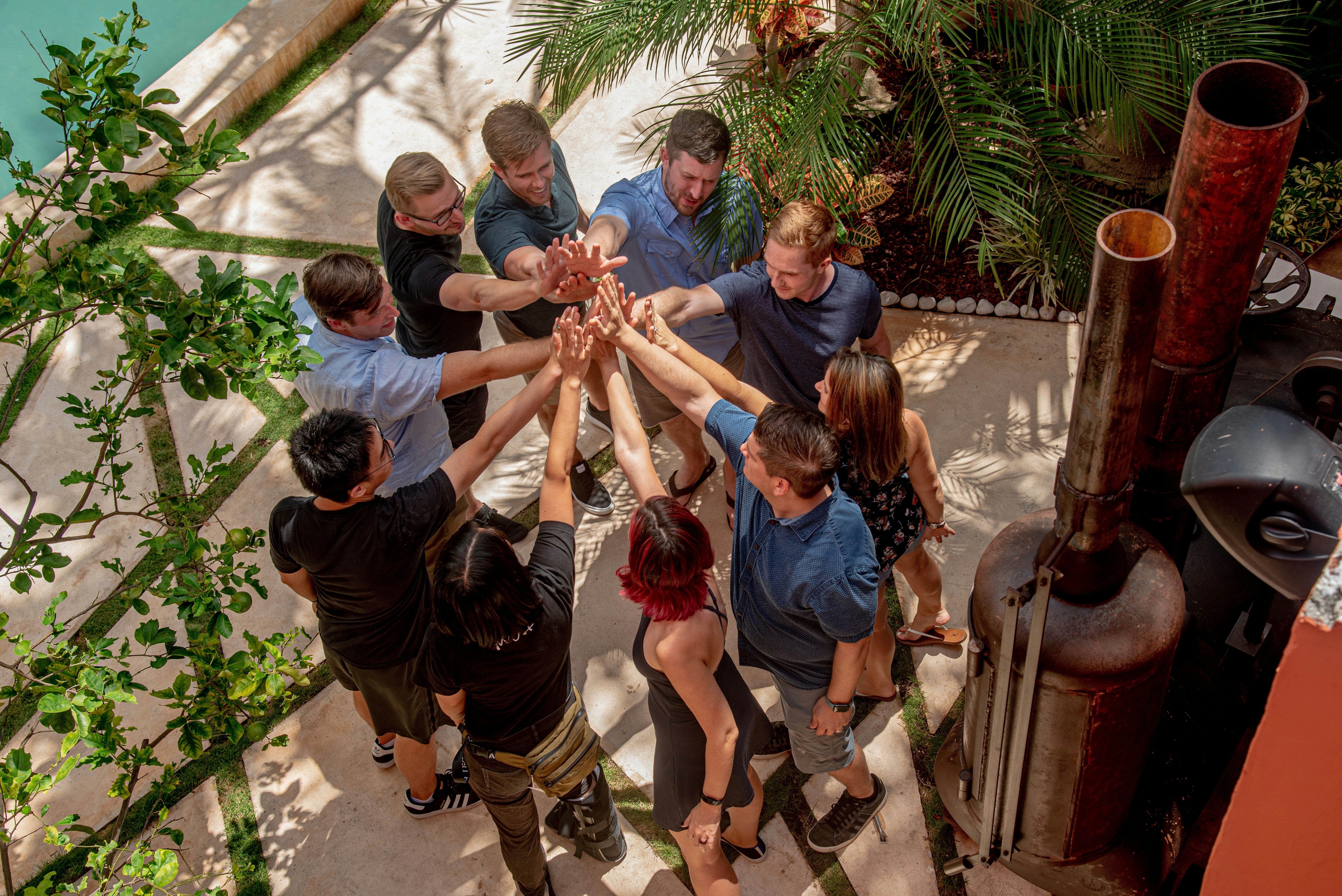
1. TEAM BUILDING WORKS, MOST OF ALL ON HOW A TEAM FEELS AND FUNCTIONS
In 2009, a group of researchers led by Cameron Klein pooled the results of earlier studies into one meta-analysis, published in Small Group Research. It looked at four kinds of team building: goal setting, interpersonal relations, problem solving and role clarification.
Their conclusion: team building “has a positive moderate effect across all team outcomes.” The effect was strongest on two things. How team members feel about each other and about the team. And how they work together, day to day.
Moderate is the honest word. Team building is not magic. But across many studies, it moves the things that make a team a team.
2. FRIENDS AT WORK MATTER, AND THEY ARE RARE
Gallup has asked employees for years whether they have a best friend at work. In the United States, just two in ten say they do.
The difference shows. In Gallup’s 2022 data, 44% of employees who strongly agreed they had a best friend at work said they would recommend their organisation as a great place to work. Among everyone else, the figure was 21%.
Gallup also finds that people with a best friend at work are more likely to get more done in less time, to share ideas, and to have fun at work.
This is a link, not proof of cause. People may find friends more easily in places that already work well. But it shows what is at stake when colleagues barely know each other.
3. MOVING TOGETHER, NOT JUST MOVING
In a 2017 study published in The Journal of the American Osteopathic Association, 69 medical students chose one of three paths for 12 weeks: a weekly group fitness class, exercise on their own, or no structured exercise.
The group exercisers reported 26% less perceived stress, and better mental, physical and emotional quality of life. The solo exercisers improved their mental quality of life by 11%, but their stress did not change significantly, even though they exercised about twice as long.
This is one small study, with students who chose their own path. It points in a direction; it does not settle the question. But the direction is worth noticing: the “together” may matter as much as the exercise.
WHAT THE THREE HAVE IN COMMON
Read side by side, they point the same way. A shared goal. Real connection between colleagues. And effort made together, not alone.
WHY WE CARE
LACTIK is a team race for colleagues: walk or run, exercise, and cross the finish line together. Every team starts together, and the clock only stops when the last teammate crosses the line.
A shared goal. Colleagues who may rarely work together, on one team. An effort they carry from start to finish. We built the race around the same three things these studies point to.
SOURCES
Klein, C. et al. (2009). Does Team Building Work? Small Group Research.
https://www.researchgate.net/publication/220030881_Does_Team_Building_Work
Gallup (2022, updated 2024). The Increasing Importance of a Best Friend at Work.
https://www.gallup.com/workplace/397058/increasing-importance-best-friend-work.aspx
Yorks, D. M., Frothingham, C. A. and Schuenke, M. D. (2017). Effects of Group Fitness Classes on Stress and Quality of Life of Medical Students. The Journal of the American Osteopathic Association, 117(11).
https://www.degruyterbrill.com/document/doi/10.7556/jaoa.2017.140/html?lang=en